
Primal Conquest: Dino Era
37GAMESStrategy
3.4566.00 Reviews
- Version
- 8.0.120
- Installs
- 1.00M
- Age Rating
- Everyone 10+
Screenshots
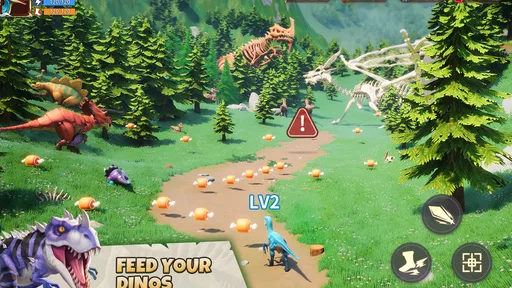
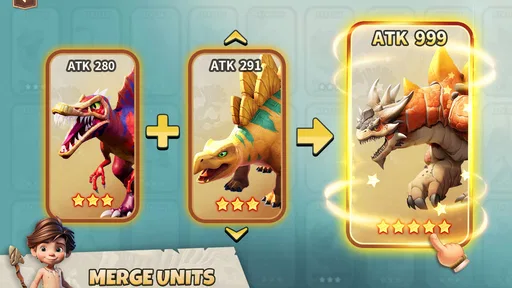
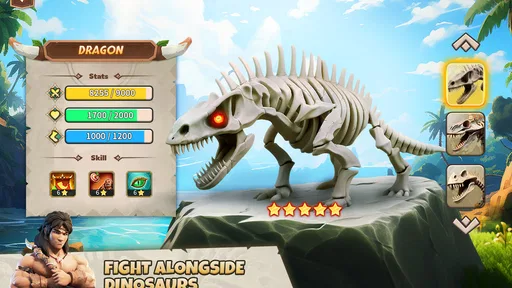
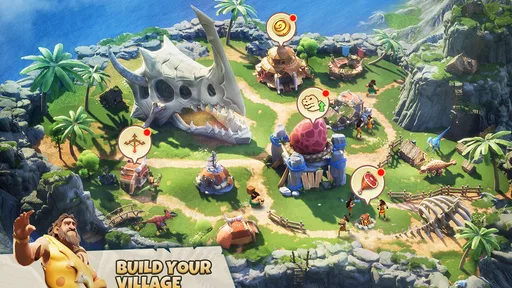
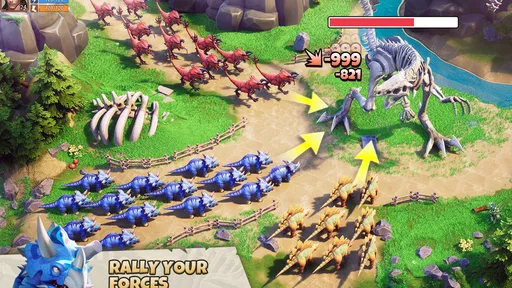
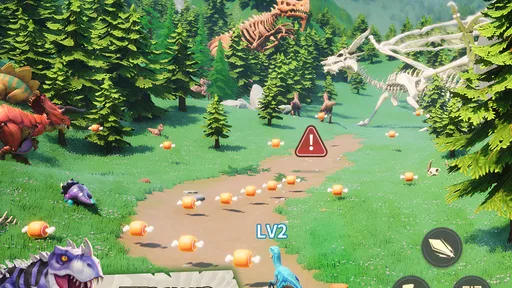
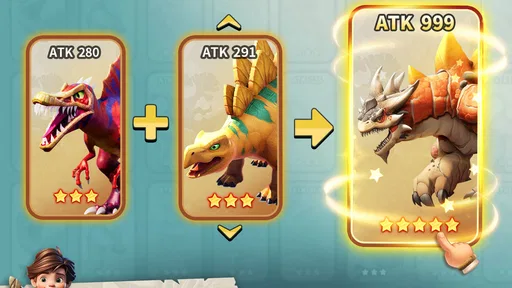

Our Review of Primal Conquest: Dino Era
 Analysis by Appyee
I approached Primal Conquest: Dino Era as a strategy game rather than a quick dinosaur distraction, and that distinction matters. Its basic promise is easy to understand: build strength, make decisions, survive pressure, and eventually compete for control. In practice, I found it best suited to players who enjoy checking progress regularly, planning several moves ahead, and accepting that growth is more important than instant action.
The game is free to start, with optional purchases ranging from $0.99 to $99.99 per item. It carries an Everyone 10+ age rating, runs on Android 7.0 or later, and comes from 37GAMES. The current version is 8.0.120. Those details make it accessible to a broad range of Android users, although accessibility is not the same as a guaranteed smooth experience on every phone.
What the dinosaur strategy loop feels like in practice
The strongest part of the experience is the way it turns a prehistoric setting into a long-term strategy routine. I was not simply tapping through a series of isolated battles. The more useful mindset is to treat every decision as part of a larger plan: what deserves attention now, what can wait, and where a short-term gain might create a problem later.
That makes the game a natural fit for someone who likes management layers around their combat. If you want a game that gives you something to consider during a short break and a reason to return later, this structure works well. It is less convincing for players who want a self-contained match, a purely reflex-driven challenge, or a story that carries the whole experience without repeated strategic maintenance.
I also noticed that the game asks for patience. Early progress can feel satisfying because each improvement seems meaningful, but the broader rhythm is built around accumulation. You are likely to spend time preparing for stronger opposition rather than winning every encounter immediately. That can be rewarding when you enjoy seeing a plan mature, but frustrating if you expect a constant stream of dramatic victories.
A realistic everyday use case is a player who opens the game during a commute, checks current priorities, makes a few decisions, and closes it before reaching the next stop. Later, that same player can return with a clearer objective instead of needing a long uninterrupted session. I found this more comfortable than games that punish every short absence, though the value of returning depends on whether you enjoy ongoing progression in the first place.
Where the pace feels quick and where it slows down
Menus and routine actions generally feel like the parts that should move quickly, while strategic progress naturally takes longer. That difference is important when judging perceived speed. A game can respond promptly to taps and still feel slow overall because its meaningful rewards require planning and waiting. In this case, the slower sensation is tied more to the design of the strategy loop than to a clear technical problem.
When I wanted immediate excitement, the experience could feel restrained. When I wanted a project to manage over several visits, the same pacing became an advantage. I would not recommend it as a replacement for a fast arcade game. Its appeal comes from gradually improving a position and making better choices with the resources and opportunities available at the time.
One useful habit is to decide what your next session is for before closing the game. I found that a simple goal—strengthen a weak area, prepare for a difficult encounter, or use available resources intelligently—made short visits feel more productive. Without that intention, it is easy to tap through routine actions and leave without feeling that the session had a clear purpose.
What happens during heavier sessions
The busiest moments are likely to come when several parts of the strategy experience demand attention together. That is when I would judge the game less by its prehistoric theme and more by how clearly it presents priorities. If the screen is full of competing objectives, a player can feel busy without necessarily making a good decision. I found that stepping back and choosing one immediate purpose helped reduce that friction.
Longer sessions also expose the trade-off between convenience and involvement. Spending more time can reveal more opportunities, but it can also encourage repetitive checking. This is not unusual for a progression-focused strategy game, yet it means the title works best when you set a stopping point. I would rather finish after completing one meaningful task than continue tapping simply because another notification or prompt is available.
Resource management becomes more important during these heavier periods. My advice is not to spend everything just because an upgrade is ready. Keep enough flexibility to respond to a new obstacle or a more valuable opportunity. That approach may slow one visible improvement, but it reduces the risk of being forced into a poor choice later. For me, this was one of the clearest ways to make the game feel more strategic and less like a sequence of buttons.
The free-to-play structure deserves attention here. Optional purchases can make progress feel more convenient, but I would approach them carefully, especially if you are still learning which improvements matter to your play style. The presence of items priced up to $99.99 means the game is not something I would hand to a child without supervision simply because its download costs nothing. The age rating is Everyone 10+, but payment decisions still require adult awareness.
Stability, recovery, and the value of a cautious routine
I would describe reliability in practical terms: keep the game updated, avoid treating it as a title for careless multitasking, and give it time to settle when the device is already working hard. The available Android requirement is relatively broad, since the game supports Android 7.0 and later, but an operating-system minimum does not promise identical performance across older and newer hardware.
For recovery after an interruption, my safest habit would be to pause at a natural point rather than closing the app in the middle of an important action. That is good practice for any progression game where a session may involve several linked decisions. I also prefer checking that the latest action has visibly completed before switching applications. This is not a claim about a hidden save system; it is simply a sensible way to protect progress in a game built around ongoing development.
Network conditions can also affect how dependable an online-style strategy routine feels, particularly when the game needs to refresh current information. I would avoid making important decisions while moving between unstable connections. If the game opens normally but a result or update appears delayed, waiting for the interface to catch up is wiser than repeatedly tapping and potentially creating confusion about what has already been processed.
That cautious approach may sound slower, but it improves confidence. I found that reliability is not only about whether an application crashes. It is also about knowing what happened after a busy sequence, understanding which action is complete, and being able to resume without uncertainty. Players who value a predictable routine will appreciate that mindset; players who want instant, carefree interaction may find the extra caution annoying.
Device limits and practical expectations
The Android 7.0 minimum makes the game available to many devices, but the experience can still vary with hardware age, available storage, background activity, and how much work the phone is doing at the same time. I would not assume that a phone capable of installing the game will provide the same comfort as a recent device. Strategy games often look calm on screen while still handling many interface elements and ongoing calculations behind the scenes.
On an older phone, I would begin with shorter sessions and watch for signs of strain such as slower transitions, warmth, or faster battery loss. Those observations are more useful than expecting a universal performance result. If the device is already close to its limits, closing unrelated applications before playing is a sensible first step. It also helps to avoid judging the game during the first few minutes after launching several demanding applications.
Storage planning is another practical consideration. The installation itself is only one part of living with a game over time, especially when updates arrive. I would keep some free space available rather than waiting until the device is nearly full. A crowded phone can make any application feel less dependable, and it makes troubleshooting more difficult when an update or recovery step is needed.
Battery use is best handled according to your routine. Short checks are more comfortable for a modest device than extended sessions with the screen continuously active. If you play at home, a stable connection and charging nearby may remove some inconvenience, but I would still avoid leaving the game running without a reason. The game is more enjoyable when you are making decisions, not merely keeping it open.
Because the title has reached over a million installs and holds an average rating of 3.4 from around 6,000 ratings, I see a substantial audience but also a mixed public reaction. I would interpret that combination as a reason to try it personally rather than assume it will suit everyone. The community size suggests the concept has reach, while the middling average indicates that the long-term loop and free-to-play choices may divide players.
Who will enjoy it, and who should choose something else
I think the best audience is someone who likes prehistoric themes but wants more than collecting dinosaur images. You should enjoy gradual improvement, resource decisions, and returning to an evolving strategy position. The game is also a reasonable choice for players who prefer short visits with a larger plan behind them, rather than demanding every session be a complete match.
I would skip it if your main goal is a fast competitive round that ends cleanly in a few minutes. I would also look elsewhere if you dislike waiting for progression, managing several priorities, or seeing optional purchases placed near the path of advancement. A traditional turn-based strategy game may be better for someone who wants clearly bounded battles and a more self-contained sense of victory.
Compared with a simple dinosaur runner or an action game built around immediate reactions, this title asks for more patience and offers less instant feedback. Compared with a classic strategy game played entirely through fixed campaigns, it feels more like a continuing project. That distinction helped me understand its appeal: the satisfaction comes from maintaining momentum, not from finishing one perfect scenario.
There is also a difference between learning the game and mastering your routine. At first, I would focus on understanding what each screen is asking me to prioritize instead of trying to optimize every choice. Once the basic rhythm becomes familiar, saving resources for genuinely important moments becomes more valuable than chasing every small improvement. That is the kind of hidden trade-off a short store summary cannot explain.
My performance verdict after living with the strategy loop
The real strength of Primal Conquest: Dino Era is its long-term decision rhythm, not raw speed. It can feel responsive enough for routine checks while still asking you to wait, prepare, and return later. That combination is appealing when you want a strategy habit, but it will disappoint anyone expecting constant action or instant rewards.
I would install it on a reasonably maintained Android device, begin without spending money, and use the early period to decide whether the progression loop genuinely holds my attention. The free entry makes that evaluation straightforward, while the broad age rating and Android 7.0 support make trying it relatively accessible. I would keep purchases under control until I understood which improvements actually change my experience rather than merely shortening a wait.
My final recommendation is measured but positive for the right player. The game has enough structure to support regular planning, and its dinosaur setting gives the strategy framework a distinct identity. Its limitations are equally clear: the pace can be deliberate, heavier sessions may feel repetitive, and optional purchases can change how comfortable progress feels. If those trade-offs match your preferences, Primal Conquest: Dino Era is worth exploring as a free strategy game from 37GAMES. If you want immediate action, a fixed campaign, or a completely purchase-free progression path, another genre choice will probably serve you better.
Verdict
Strengths of Primal Conquest: Dino Era
- Large dinosaur roster with varied abilities and roles
- Base-building and resource management add strategic depth
- Alliance features encourage cooperation and shared progression
- Regular events provide extra objectives and rewards
- Accessible controls make it easy to play on mobile devices
Limitations of Primal Conquest: Dino Era
- Progress can become heavily dependent on timers and resource collection
- Competitive advantages may favor players who spend money
- Many upgrades require waiting or using premium currency
- The interface can feel crowded for new players
- Online features require a stable internet connection
Other Releases by 37GAMES
View All
Ant Legion: For The Swarm
Strategy4.6

Puzzles & Survival
Strategy4.5

Puzzles & Chaos: Frozen Castle
Strategy4.1

Puzzles & Conquest
Role Playing4.7
Similar Picks in This Category
View All
Clash of Clans
Supercell4.5

Plants vs. Zombies™
ELECTRONIC ARTS3.7

Lords Mobile: Kingdom Wars
IGG.COM4.5

Clash Royale
Supercell4.4

State.io — Conquer the World
CASUAL AZUR GAMES4.1

Car Driving School : Car Games
Spark Game Studios3.9
Frequently Asked Questions
What is Primal Conquest: Dino Era about?
Primal Conquest: Dino Era is a dinosaur-themed strategy and management game in which you build and develop a prehistoric settlement, gather resources, research new technologies, and train creatures for combat. The main appeal comes from combining base construction with dinosaur collection, territory expansion, and battles against rival players or computer-controlled enemies. Progress involves planning upgrades carefully and improving both your settlement and army.
Is Primal Conquest: Dino Era free to download and play?
The game can generally be downloaded and started for free, allowing players to experience its main systems without paying at the beginning. However, it includes optional in-app purchases that may speed up construction, provide resources, unlock useful items, or offer special bundles. Players who prefer not to spend money can still make progress, but upgrades and training may take longer, especially as the settlement becomes more advanced.
Does the game require an internet connection?
Primal Conquest: Dino Era is designed primarily as an online strategy experience, so a stable internet connection is normally required for important features. Online access supports account synchronization, events, multiplayer activities, rankings, purchases, and communication with other players. Although some menus or previously loaded content may open temporarily without a connection, the game should not be considered a fully offline title.
Is Primal Conquest: Dino Era suitable for children?
The game may be accessible to younger players because its presentation focuses on colorful dinosaurs, settlement building, and simplified strategy mechanics. Nevertheless, parents should review the age rating in their region because ratings can vary by platform. The game may also include advertisements, online interaction, competitive features, and optional purchases. It is advisable to enable purchase restrictions and discuss spending and chat safety before allowing children to play.
What should new players know before starting?
New players should expect a gradual progression system rather than immediate access to every dinosaur, building, or battle feature. It is useful to follow the tutorial, complete early missions, and prioritize resource production, storage, research, and defensive improvements. Joining an active alliance or group can also provide helpful rewards and social advantages. Because timers and limited resources become more important later, spending upgrades carefully is better than developing everything at random.
Play our best games!


